
LAURENT DEHORS TOUS DEHORS
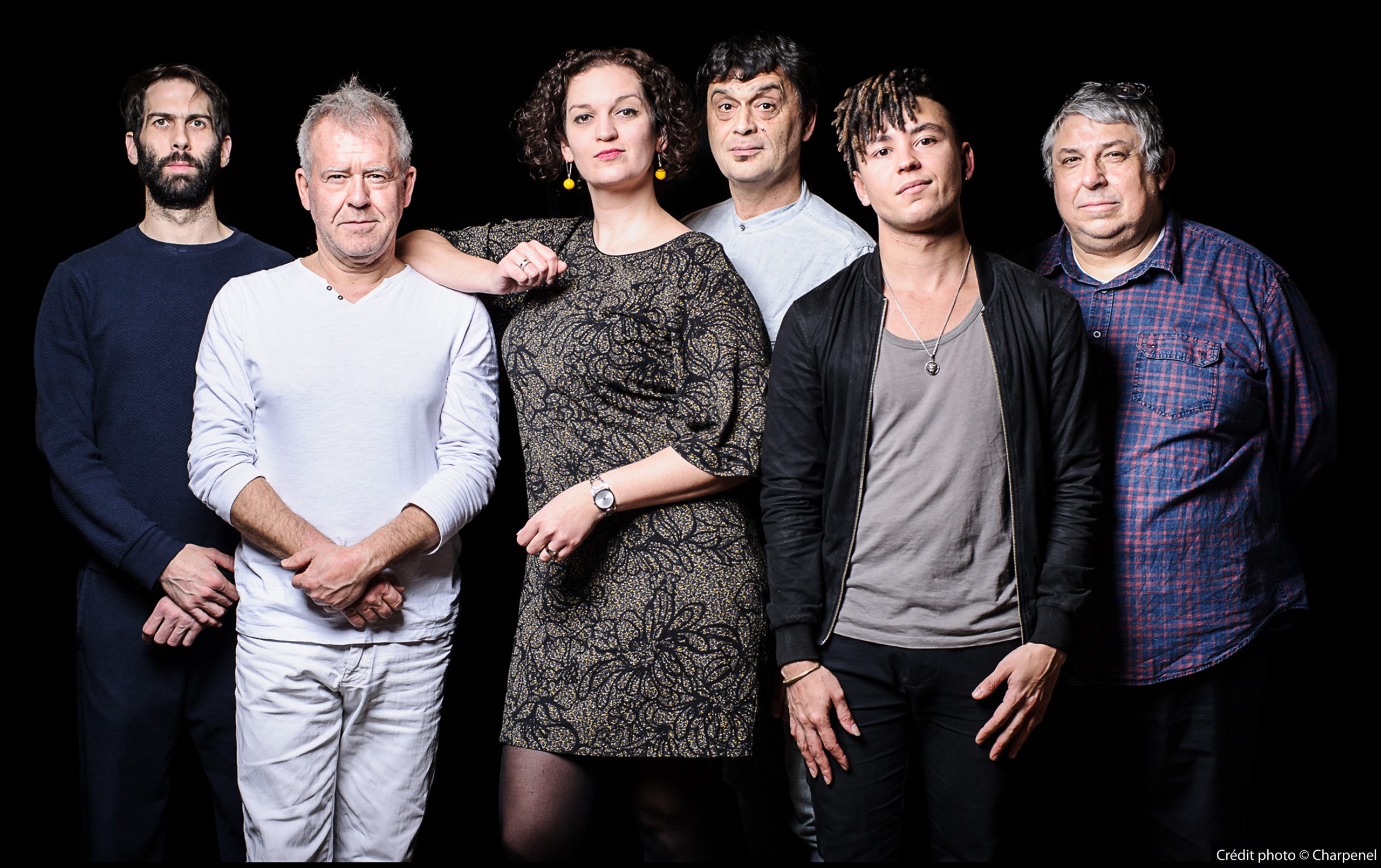
Laurent Dehors artistic direction, composition, saxophones, clarinets, bagpipes, Jew's harp, vocals / Tineke Van Ingelgem soprano / Jean-Marc Quillet percussion / Michel Massot tuba, trombone / Matthew Bourne piano / Gabriel Gosse guitar, seven-string electric guitar, banjo, and percussion
After a 1st Opus created in 2010, Laurent Dehors is happily pursuing his exploration of the lyrical repertoire, using his own jazz composing bearings as his inner compass.
Respectful yet daring, demanding yet joyful and poetic, in this opus 2 he pushes back aesthetic boundaries to breathe a fresh, breathtaking wind into the opera's essential pieces, as well as lesser-known arias and an original piece.
Laurent Dehors offers here a whimsical and profound shift, carried by the solar soprano Tineke Van Ingelgem and five poly-instrumentalists ready to push back the aesthetic contours of the operatic repertoire with a slightly "no-limit" ease.
From Bizet to Purcell, via Mozart, Verdi, Rameau... or a slam version of a Flemish opera, the repertoire is enlivened, contorted, ornamented and finely reinvented.
The profusion of instruments (glockenspiel, balafon, vibraphone, marimba, drums, trombone, tuba, bassophone, saxophones, clarinets, Jew's harp, bagpipes, banjo, guitar, piano and prepared piano), the vocal range of soprano Tineke Van Ingelgem, the richness of interpretation and inventiveness, make Une petite histoire de l'opéra, Opus 2 a surprisingly vibrant and energetic project.
discography
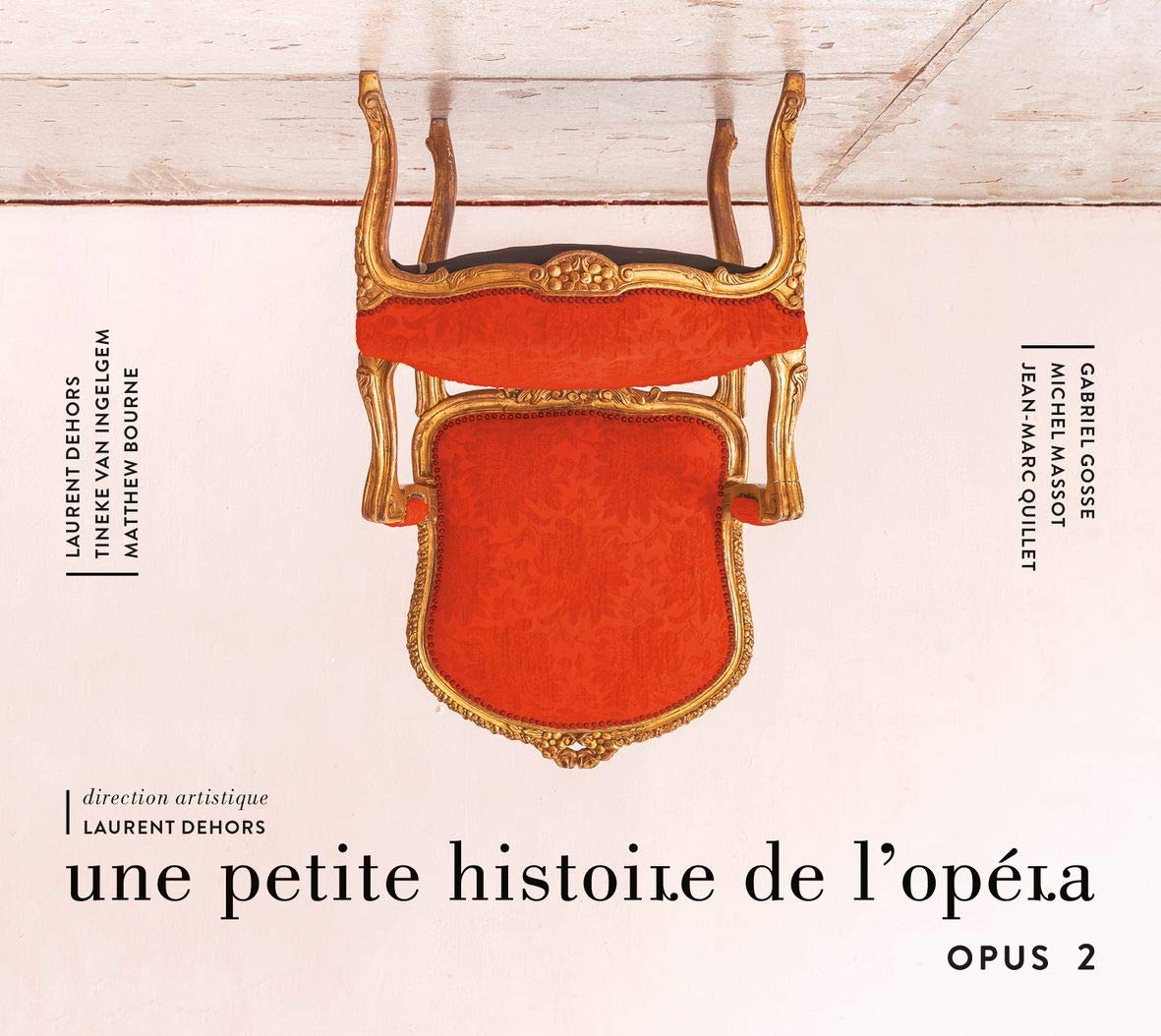
A SHORT HISTORY OF OPERA, OPUS 2
Release 2018
Tous Dehors
Le choix de L'Obs / Tops 6 Jazz News / Choc Jazz Magazine / Elu Citizen Jazz
A SHORT HISTORY OF OPERA
Released 2010
Tous Dehors
press
THE NEW OBSERVER / Le Choix de l'Obs' by Bernard Loupias - November 15, 2012
At the heart of Tous Dehors, his pataphysical Big Band, Laurent Dehors (clarinets, saxophones) usually prefers large ensembles [...] But here, in duet with Matthew Bourne, a magnificent English pianist fluent in both jazz and so-called contemporary music, he delivers, in an intimate mode, one of the most beautiful lessons in clarinet(s) and music we've heard this year.
JAZZ NEWS by Thierry Lepin - December 2012 Top 6
Not a word, yet these love songs still resonate with their poetic fragrances. In seventeen miniatures, Laurent Dehors (clarinets) and Matthew Bourne (piano) weave an inner journey far removed from their usual facetiousness and impertinence. For the dialogue is judiciously playful. Sometimes moody, sometimes carnal, these songs rustle with all the senses of love.
CHOC JAZZ MAGAZINE / Jazzman by Ludovic Florin - November 2012
[...] With "Chansons d'Amour", the Bourne-Dehors duo offer seventeen miniatures oscillating between mischievous smiles - at times almost childlike - and melancholy without sinister, as many little pearls of invention. The expressive, technical and sonic palettes of these two artists literally astound: piano-percussion, swinging contrabass clarinet (BDK Theme), reminiscence/remoteness of Albert Ayler's bagpipes (Scotch Missed) [...] All of which imperfectly represent the furious craftsmanship of these two acolytes. "Chansons d'Amour" is a record that can't be listened to with your head in your hands, but each time you listen to it again, you experience a little more joy and discovery. Delightful!
CULTURE JAZZ by Thierry Giard - Voted Tourne-Disques of October 2012
Matthew Bourne, one of the most original pianists on the British scene, converses with Laurent Dehors, a musician who makes a mockery of convention, usually without restraint... But here, it's something quite different. In the cosy setting of La Buissonne studios, they sketch the contours of melodies that are tender or acidic, ramshackle or finely embroidered. [...]
CITIZEN JAZZ - elected December 2012
If Love could be strictly musical, this duo would necessarily be a true love story, strong, stormy, resisting all winds and passions [...] With this album, this common verb is revealed at its purest and rawest. The absence of primer makes it all the more beautiful. [...] These "Chansons d'Amour" expose all the sensitive phases of love: estrangement and crystallization, perfect agreement and quarrelling. All together, or isolated to be better seen in depth.